






Blog
The advantages of rattan compared to wood or plastic

The advantages of rattan compared to wood or plastic
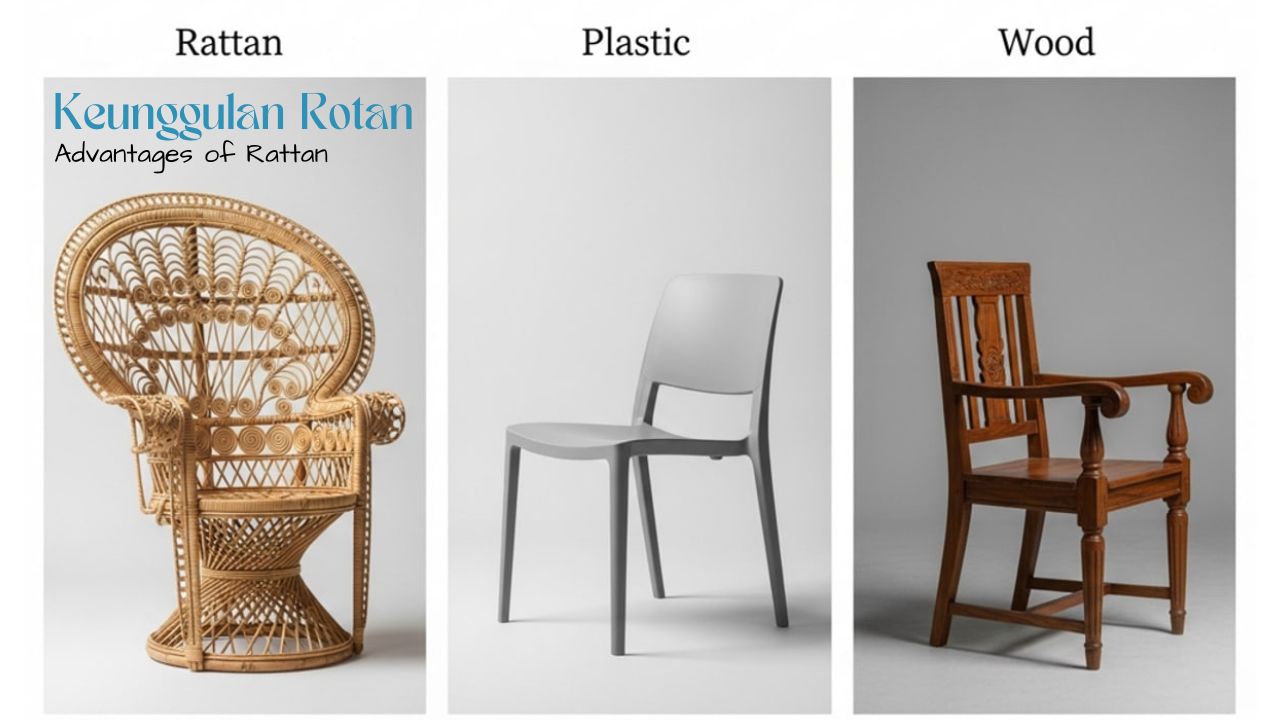
In recent years, the trend of using natural materials in furniture has been on the rise again. Modern consumers are increasingly seeking products that are not only beautiful and functional, but also environmentally friendly and have a natural character. Amid this trend, rattan has emerged as a favorite material, especially for furniture in homes, cafes, hotels, and outdoor spaces. Rattan has its own unique appeal: it is lightweight, flexible, strong, and provides a warm and natural feel to a room. Rattan is not only used as an aesthetic element, but has also become a symbol of a sustainable lifestyle. Meanwhile, wood and plastic remain the two most commonly used materials in the furniture industry, each with its own advantages and disadvantages.
In this article, we'll examine rattan's position in comparison to these two materials—wood, known for its strength and elegance, and plastic, which is lightweight and practical. By understanding the unique characteristics of each material, readers can clearly see why rattan is increasingly being chosen as a primary material. furnitur modern.
What is Rattan?
Rattan is a natural material that has long been a mainstay in the Indonesian furniture industry. A member of the palm family, rattan grows as a vine in the tropical forests of Southeast Asia, including Indonesia, which is one of the world's largest producers. Unlike wood, which has a hard, thick stem, rattan is slender, flexible, yet incredibly strong—making it ideal for a wide variety of furniture. In the modern industry, several types of rattan are most widely used, such as manau rattan, known for its strength for frames; sega rattan, which is elastic and suitable for weaving; and fitrit rattan, which has been processed into thin slices for detailed weaving. The combination of these various types of rattan allows for the creation of beautiful, durable, and ergonomic furniture designs.
As a natural material, rattan has several fundamental advantages, such as high flexibility, light weight, ease of shaping, and a tropical, warm, and natural appearance. This is what makes rattan increasingly popular, especially in an era when consumers are turning to environmentally friendly and sustainable materials.
The Advantages of Rattan Compared to Wood
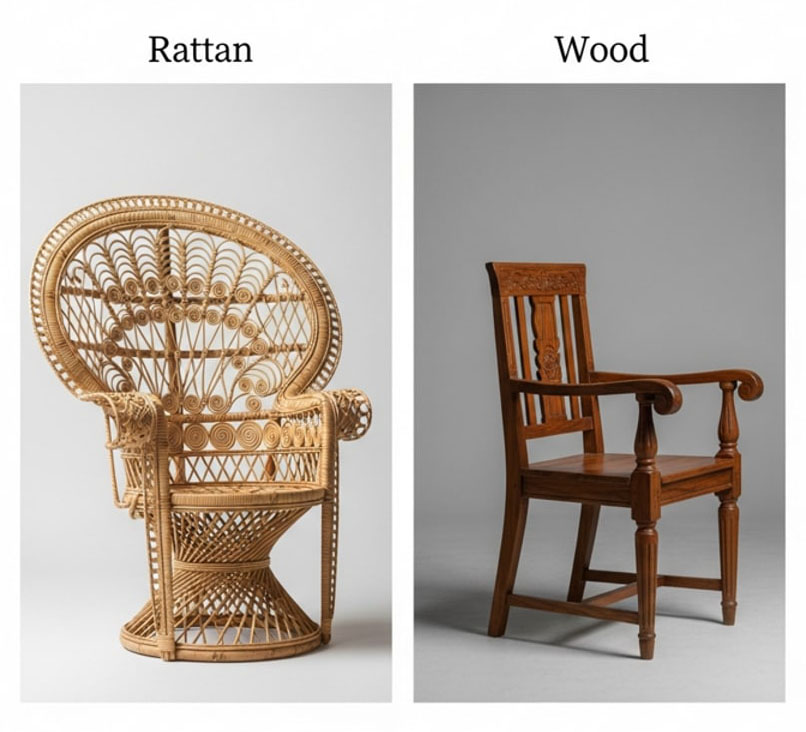
In the furniture world, wood is often considered a classic, strong and classy material. However, rattan is now increasingly prominent as an alternative that is not only lighter, but also more flexible and environmentally friendly. Many modern furniture designers and manufacturers choose rattan for its unique characteristics and its ability to embrace natural and eco-friendly lifestyle trends. Compared to wood, rattan offers various advantages that make it increasingly popular, especially for home, cafe, hotel, and outdoor furniture needs.
a. Lighter but still strong
Rattan is known as a material with an excellent strength-to-weight ratio. Although much lighter than solid wood, rattan's dense fiber structure makes it sturdy enough for use in furniture.
• Easy to move and rearrange — Perfect for modern homes that prioritize flexibility, including small spaces that frequently change layout.
• Ideal for cafes and commercial spaces — Entrepreneurs can quickly rearrange furniture when changing interior concepts or increasing customer capacity.
b. More flexible, easy to shape
Rattan has elastic properties that hardwoods lack. This material can be bent through a heating process, allowing for a wide range of design creativity.
• Varied design process — From woven, organic curves, to complex artistic motifs, all are easily realized with rattan.
• Easy to custom design — Consumers who want unique and personalized furniture will find it easier to get the model they want because rattan is more flexible during the production process.
c. More Affordable Prices
Compared to solid wood furniture such as teak or mahogany, rattan requires a more efficient and faster production process.
• Faster production process — No need for long processes such as years of drying or heavy processing like hardwood.
• Advantages for mass-market and export markets — Competitive prices make rattan furniture in demand in the international market, especially for the home, hotel and outdoor segments.
d. Environmentally friendly
Rattan is a very fast growing plant and can be harvested without cutting down the entire plant.
• Grows faster than wood — Rattan's harvest cycle is only a few years, while solid wood can last decades.
• Lower pressure on forests — The use of rattan helps reduce the exploitation of timber forests, thus further supporting sustainability and nature conservation.
The Advantages of Rattan Compared to Plastic
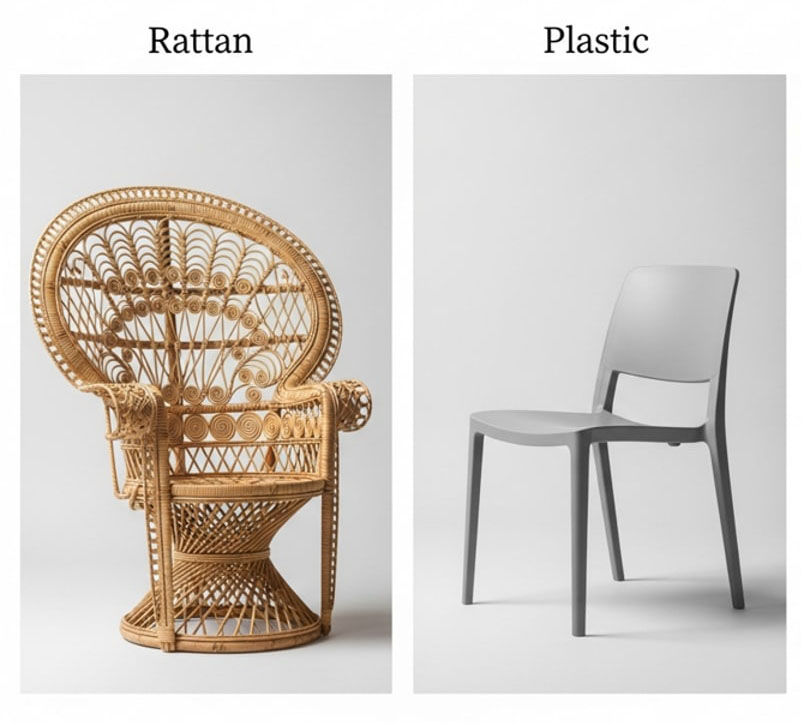
Amidst growing awareness of the use of more natural and environmentally friendly materials, rattan has once again become a top choice in the furniture world. Compared to plastic—which has long been popular due to its affordability and diverse shapes—rattan offers significantly higher aesthetic value and durability. Furthermore, rattan creates a warm and natural feel that synthetic materials cannot replicate. With the growing trend of eco-living and organic interiors, many consumers are shifting from plastic furniture to rattan, which is classier, more durable, and ultimately more environmentally friendly.
More Natural & Aesthetic Appearance
Rattan has a natural character that plastic can't replicate. The fibers and colors of rattan lend a warm, cozy, and vibrant feel to a room. This is why rattan furniture is so popular for modern interior designs like bohemian, rustic, coastal, and tropical. Meanwhile, plastic tends to look flat and lacks aesthetic appeal.
More Environmentally Friendly
Rattan is a material biodegradable, meaning it can decompose naturally without polluting the environment. Unlike plastic, which takes hundreds of years to decompose, rattan is a greener and more sustainable material choice. Many modern consumers prioritize eco-friendly materials, resulting in increasing demand for rattan in the global market.
More Durable for Indoor Use
Plastic can easily become brittle if exposed to heat or sunlight for extended periods. Plastic furniture also tends to dull and crack. Rattan is actually more durable when used indoors. Its fiber structure is strong, and the weave is resistant to breakage. With proper care, rattan furniture can last for years.
More Exclusive and Artistic
Each piece of rattan furniture is handcrafted by skilled artisans, resulting in a unique and highly artistic product. No two rattan pieces are exactly alike. This contrasts with plastic furniture, which is mass-produced using machines, lacking the exclusivity and artistic touch.
Rattan Disadvantages and How to Overcome Them
While rattan has many advantages, there are some drawbacks that should be considered to ensure the product's longevity. Here's a complete explanation:
1. Sensitive to High Humidity
Rattan is a natural material that easily absorbs water. If placed in an area that is too humid or exposed to constant rain, rattan can:
- Inflate,
- moldy,
- Or loosen the weave.
Solution:
- Use a waterproof coating or varnish to protect the rattan surface.
- Place rattan furniture indoors or in a semi-outdoor area protected from rain.
- Make sure the air circulation in the room is good so that the rattan stays dry.
2. Requires Regular Maintenance
As a natural material, rattan requires care to maintain its durability. Without care, rattan can become dull or crack over time.
Solution:
- Do a light cleaning using a damp cloth or soft brush to remove dust between the weaves.
- Re-varnish every few years to maintain the color, shine, and strength of the material.
- Avoid placing rattan in areas that are too hot or exposed to direct sunlight for long periods.
Conclusion
Rattan offers the ideal combination of strength, beauty, design flexibility, and environmental sustainability. Compared to wood and plastic, rattan is a lighter, more malleable, more environmentally friendly, and aesthetically pleasing material. These advantages make rattan a leading material for a wide range of modern furniture needs—from homes and cafes to villas and hotels, to interior and exterior decoration. With proper care, rattan furniture offers comfort and long-term durability unmatched by other materials.